Tom Petty’s Heartbreakers Interview: New Box Set, Reunion
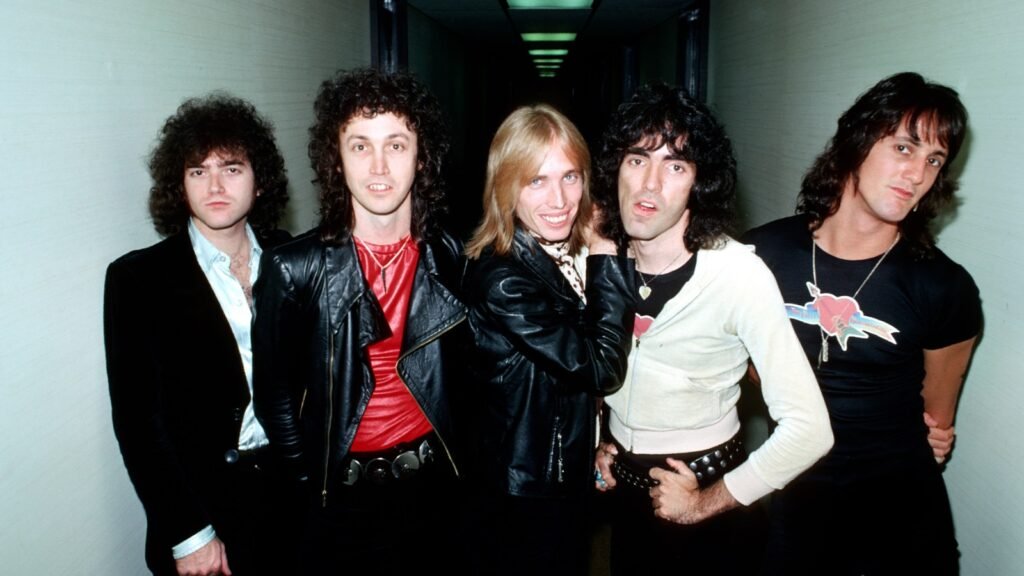
When the history of Tom Petty and the Heartbreakers is told, their third LP, 1979’s Damn the Torpedoes, is often characterized as the breakthrough that forever changed their fortunes. And while there’s quite a bit of truth to that, it obscures the fact that it was preceded by two stellar albums, several of their most beloved singles, and nonstop touring that earned them a big fan base in the U.K. and America. Prior to all that, Petty recorded a lot of music with his early band Mudcrutch and during an aborted solo career that followed in the immediate aftermath of their implosion, even though very little of it was actually released.
This fascinating era is finally getting the love it deserves in the revelatory Tom Petty and the Heartbreakers box set Origins 1971-1978, which arrives Nov. 6. It includes several Mudcrutch recordings, songs Petty created with Al Kooper, Leon Russell, Jim Jordan, and Emory Gordon shortly before the Heartbreakers came together in late 1975, remastered editions of 1976’s Tom Petty and the Heartbreakers and 1978’s You’re Gonna Get It!, studio outtakes, a complete concert they played at the Record Plant in 1977, and their performance on BBC’s Old Grey Whistle Test in 1978.
To chat about these formative years for Tom Petty and the Heartbreakers, we hopped on Zoom with bassist Ron Blair and keyboardist Benmont Tench. The conversation covers the early days of Mudcrutch, the formation of the Heartbreakers, the creation of “American Girl,” the endless slog of their early touring, Blair’s return to the band in 2002 after a two-decade hiatus, the band’s recent performance with Chris Stapleton at the 2026 Americana Honors, and the possibility of future reunions.
Ron, you obviously weren’t in Mudcrutch. When do you recall first coming across them?
Blair: I went to Gainesville my second year of college, and the town kind of freaked me out. It was 1968, I think, when I got there. It was just this hippie town, like what I saw on TV of San Francisco. And my dad was in the military. I’d been in Japan for three years. I was in culture shock, and Gainesville just freaked me out. The alligators and the swamp and the flatness of it. And there were a million musicians.
So, eventually I joined a band that needed a bass player called RGF. We started playing around, and we would do some of the same gigs that Mudcrutch would do. I would also just see them around town at different places. There was a university club called the Rathskeller and I saw them play there one time. It was very intriguing. I just thought they were a really mysterious band.
Not only did I not understand Gainesville, but I did not understand this band Mudcrutch. They were bluesy, they were country, they were eclectic, and I just couldn’t peg them. And Ben probably knows what I’m talking about. It just was so unusual. I was really intrigued by them. Then I grew to like them. I met Tom through a girlfriend I had who knew Tom’s wife. So I kind of became friends with Tom as well as an admirer of their band.
Benmont, let’s jump forward a bit. When Mudcrutch got to L.A. in 1974, I imagine you presumed you’d have a similar story to Buffalo Springfield or the Byrds by playing at the famous clubs on the Sunset Strip and signing with a major label. That’s not what happened.
Tench: That was kind of the pipe dream, but I don’t think we ever articulated it. Ron is right. When I first saw Mudcrutch… I just saw somebody on Instagram using the shorthand that they were a “Southern rock band.” And no, not at all. It was semi-psychedelic, country, some Grateful Dead in there, a little bit of old rock & roll, some original stuff, all these interweaving wild, beautiful things. They were kind of indescribable. And so I fell in love with them. Then I got to join them.
When we got to L.A., we thought, “Well, it’s the Promised Land.” You either go to New York City and starve in the cold or you go to California and starve in the sunshine, the site of the Byrds and everybody. That was out west. We were like, “Let’s go there.”
Tom said that he literally picked up a phone book and started calling record companies when he arrived. That didn’t go like he hoped.
Tench: No, but he did get heard. I think the best feedback they got was from Playboy Records. And it was somebody who was A&R there, but was also, I think, a jazz critic, who said, “You got something, but you really have to work on your songs.”
And then the second trip out, he opened the phone book, met with a lot of people, and they said, “This is really distinctive.” Only one company wanted to sign us, London, and they wanted us to support ourselves by playing Top 40 songs in a bowling alley. We were like, “If that’s what it takes…” But, man, we were disheartened. We didn’t play Top 40, ever.
There’s a lot of really interesting Mudcrutch studio tracks on this box set. I didn’t realize the band had recorded so many songs. It’s fascinating to imagine what an actual Mudcrutch record could have sounded like if you’d kept going back then.
Tench: If you had gone through all the best stuff and focused on Tom’s songs…because I was writing songs that were all over the place and not that good. Danny Roberts was singing my songs because I was too shy. And Danny sang great Southern rock, but I was trying to write, God knows why, in the vein of Todd Rundgren and Steely Dan or something, and the blues-rock voice didn’t work. If they had taken the kind of thing that’s on this record, then you can see what a Mudcrutch record could have been.
So the band dissolves and Tom goes off to work with Leon Russell, Al Kooper, and all these other great people. Do you think this was an important period that really sharpened his writing?
Tench: Obviously. It was kind of an apprenticeship. And he got to explore different styles. He could hear different kinds of things and get immersed in different kinds of cultures. And it was also really important for me, too. I’m like, “Uh-oh, my family just ditched me in Los Angeles, basically. I’m on my own. My parents are helping, but I’m on my own. I better get my shit together.”
And so I worked really hard on playing better. I’d go audition for bands, and in general, it just reinforced how good a songwriter Tom was and that there was something really special in Mudcrutch. The only character I met that resonated with me was a rockabilly guitar player with a high pompadour. And he came over to my apartment and we played, and I really dug it. But I didn’t really want to focus on rockabilly, and it was [future X guitarist] Billy Zoom.
So there was nothing there. When we got to actually put the Heartbreakers together, it was like hallelujah. I’m back in the fold with the people with talent.
Ron, the first time you played with the Heartbreakers was that famous session that Benmont put together. Did you immediately feel the chemistry with everybody?
Blair: I remember it feeling really comfortable, and it was easy to concentrate on the things you should be concentrating on when you’re in the studio: playing the song well, getting a decent tone out of your instrument, and joining in the camaraderie. It’s a beautiful, communal effort, which happens less and less. Now, you get one or two players together, and then the other two send you files and everything. But it was back in the day when you’d round everybody up, and it was analog tape, and you’d pretty much get the good takes early on without having to slave over it.
I talk a lot about that track “Mystery Man,” how it just unfolded before we knew it. We had cut it, and it was just, “Wow, we can do that without even trying?” It still blows my mind. I’m still trying to do that. It’s like your first shot of a good tequila. You’re always looking for that taste again, which I had to quit. But I’m still looking for that incredible magic when you get a group of people together and you just hit on something for long enough to call it a recording.
Benmont, most people don’t realize that, at least for the first day, this was your band. You put everyone together, including Tom.
Tench: Well, it was me and [drummer] Stan [Lynch], and it was Tim Kramer’s band because he was my friend, a recording engineer who said, “Come down and record, get some musicians.” And I had met everybody between me and Stan. We got Mike, Ron, [guitarist] Jeff Jourard, Randall Marsh from Mudcrutch played on a couple things. But I didn’t know Ron. I knew of Ron, but I didn’t know Ron. So that was a really good surprise. It was like, “Okay, Stan, you’re right. This is the cast.”
And it was fun, man. Everybody was from Gainesville. At last, we’re all in a room, and we’re all from the same place.
In early promo shots of the band, Jeff Jourard is presented as a full member. How long did it take you guys to realize that there was one guitarist too many?
Blair: Relatively early on.
Tench: He was really good, Jeff Jourard. He’s on three or four songs on the first record. He was really good, just one too many.
Ron, how well do you remember the moment you cut “American Girl” on July 4, 1976? Is that frozen in your mind?
Blair: It gets more frozen every time I hear Mike talk about it because he said that that was the moment for him where it really became something. But I guess I thought that it was a really different song. At the time, I can’t even think of another song that was similar, and it just sounded about as original as you can get. I thought, “Wow, we’re an original band.”
I had sort of given up on the thought of being in a fantastic original band at that time. I had been through so much crazy band drama. I just really wanted to play music with like-minded people. And I guess that song must have spurred something. “We’re an American band. We’re an original American band with all the possibilities laid out before us.”
Ben, did you feel the same way?
Tench: Well, I loved what we were doing up to then, and I will name-check, like Ron, “Mystery Man,” which I think is a gorgeous little record. But “American Girl,” I don’t know if Stan pointed it out to me at the time or Cordell or who. But it doesn’t rhyme until you get to “Oh yeah, alright/Take it easy baby/Make it last all night.” It just don’t rhyme. Really cool song, unusual beat. And also, it did strike me that “‘American Girl,’ it’s the Bicentennial. That’s kind of interesting, neither here nor there.” But it did make me focus and go, “I wonder if anybody’s ever going to notice this song?” Because I thought it was great, but you never know.
I find it fascinating that despite all those great songs on the first record, including “Breakdown,” “American Girl,” and “Fooled Again (I Don’t Like It),” the first song of yours that charted anywhere was “Anything That’s Rock ‘N’ Roll” in the U.K. How did that happen?
Tench: The record companies must have thought that was a single, which is the last thing I would’ve thought was a single. But it got us on Top of the Pops. Right, Ron?
Blair: Right. Well, it just had that catchy kind of pop beat that I guess a record company would latch onto, like, “Hey, we could sell this. This will wake people up.”
Tench: It was very pop, and England will go for the very pop. They’ve always gone for the very, very pop.
You guys landed in England at the red-hot peak of the punk movement, where the Clash and Sex Pistols were playing every night. What was it like to be there at that moment?
Tench: Well, I went from feeling like a fish out of water in L.A. to feeling like a fish out of water in London. It was all the same thing.
Tom is wearing a leather jacket with bullets around his neck on the first album cover. It made a lot of people just presume you were a punk band.
Tench: I don’t think it was his jacket. I think they gave it to him for a photo shoot along with the bullets.
Blair: Yeah, the bullets were not his.
Tench: It didn’t feel like we looked or behaved at the time, but I like it. But the punk thing, it’s just like we were younger. We were not wearing white satin pants and doing extremely long exhibitions of whatever prowess we had on our instruments. Which probably everybody else might have, but I’m really good at faking it. So we weren’t doing prog rock, and we weren’t doing glam, and we were trying not to be overindulgent. We just wanted really good songs. So what we had in common with actual punk bands was short songs, getting to the point, good and catchy songs. I mean, you’re not going to find a better body of songs than the Clash.
What was it like to open for Al Kooper at those very early shows and see nothing but blank faces who had no clue who you were?
Blair: It was just what you said. We even had an A&R man from ABC Records come back and hand us a stack of records, and I reached out and grabbed them. He said, “Here, here you go, man. We can’t give these away.” I said, “Well, I’ll take them.” They were promo copies.
Did you grow as a band during times like that, since you had to learn to win over crowds night after night?
Blair: At that time, it must not have mattered because we’d travel all day. God, some days we’d be in five different kinds of vehicles, a helicopter, an airboat or whatever. But by the time you get a chance to play and the gear is pulled out of a truck and set up onstage, you’re just pretty happy to play and make some music, and you’re not really calculating the intake at the door or whatever. It’s just another whistle-stop along a long track.
Ben, what was it like for you?
Tench: I was lucky. I was hiding behind an actual grand piano and the big old Hammond C3 organ. I didn’t have to face the people as much. But I figured Tom was gauging all of that stuff as far as the reaction. We all just wanted to be as great as we could. We wanted to be such a good band that we would completely blow them away. But like Ron said, we’re actually traveling around, whether it’s England or the Midwest. What are we here to do? We’re here to play.
So you’d get at the end of an actual eight, 10, 12 hours on a freezing day in a van and pull up outside the Exit/In in Nashville and go in and straight onto the stage, and you just play. And so there’s 12 people there. I remember we played that gig in Boston that got taped, the one at Paul’s Mall. There were far more people between our band and Al Kooper’s band, far more people on the stage than there were in the audience. Didn’t matter, really. Technically, yeah, of course it matters. You want to play to enough people that they want you back, and you want to make an impression, a connection. But it didn’t matter as far as how we played.
What was it like when you opened for Kiss?
Tench: We played at Hot Nights in the South, a tiny club in Palm Beach, Florida, with peanut shells instead of sawdust on the floor. And then there was the chance to open for Kiss in a basketball arena. So we went from Hot Nights in the South to opening for Kiss in a basketball arena. And the rumor around was that the opening act was going to be Boston, which had a giant hit since “More Than a Feeling” had just come out. And we weren’t Boston. But we got to see Kiss without their makeup before anybody else did, so it was cool. Then we went back to a really tiny club, probably in Cocoa Beach, Florida, or something, George’s Steak House.
Tom often said that the second record was made too quickly and it suffered as a result. Is that how you see it?
Tench: Yeah. I mean, it’s the second record. That’s how they usually are. You have time to stockpile songs before the first one. The second one is, “Come on, get some songs.” But by the time we were playing in England, at least certainly by the time we stuck around and played as a headliner after opening for Nils Lofgren, Tom had written “Listen to Your Heart” and “I Need to Know,” I think. So we were going out and playing those cold to an audience, and you couldn’t get them on the record yet. So he had a couple in his pocket. But a bunch of it, yeah, we kind of made up on the spot.
I love “Magnolia” and the title track. But most songs on that record, you dropped from your live repertoire right after the tour ended.
Tench: Yeah. Well, we would play “Too Much Ain’t Enough” sometimes. But things like “Hurt” didn’t get much of an airing. “Magnolia” didn’t get much of an airing. I think we played it once because Peter Bogdanovich loved it. We played it much later, but I don’t think we played it much. “You’re Gonna Get It,” we used to play that song.
You guys played Knebworth with Genesis, Devo, and Jefferson Starship in 1978. The audience was just an ocean of people. What’s your memory of that day?
Blair: Oh, it was a pop festival, 300,000 people or something, the biggest gig we ever played, and it was overwhelming. Did we come back and the Kinks were headlining? Was that another trip to Knebworth or was it that first time?
Tench: I don’t remember. I remember we were on fairly early in the day. I remember that we needed to be good, and I think we were good. But we came out and we would open with “Listen to Her Heart,” which starts with the guitars, and then the organ comes in. I’m like, “Hot damn, this is really killer.”
And I hit the first chord on the organ, and because of the discrepancy in voltage and the fact that somebody hadn’t put the right converter on it, it’s way out of tune with the rest of the band. I’m like, “Oh, fuck.” So it was kind of fun. I had to play the whole show on the piano, couldn’t play the organ. What I mainly remember is the pressure and the size of the crowd.
The break with producer and Shelter Records owner Denny Cordell came around this time. Tom always said it was very painful since he played such an enormous role in the early days of the band. But he also said he was just a tiger when it came to business matters.
Blair: He had what happened to most of the Black artists and most of the jazz artists early on, where businessmen would get in there and sign people who don’t have the skills of the business. They sign them, they take their publishing, they take all of the money. You end up signing something that you don’t understand, and you may or may not have had a lawyer. And if you did have a lawyer, it’s somebody that they set you up with. “Here, go see this guy.” And so you sign something that’s basically giving away all your rights, and you don’t even know what they are.
Tench: Tom and Denny were best friends. And at one point, I think Tom told me that Denny had said to him, “Hey, don’t take it personally. It’s just business.” And Tom’s like, “I have a new child. It couldn’t be more personal.”
Where I was, I thought it was really sad and awkward because, for the duration of Mudcrutch and then when the Heartbreakers got together, Cordell shepherded us along. And now it was like, “Who am I going to side with?” Well, obviously, for the justice of it, because he’s my friend, Tom. But Cordell’s presence was in that town. He opened that roller disco, Flippers, which was supposed to be a really fun club, though I didn’t roller-skate and I didn’t like disco. But I never went just out of solidarity with Tom because it was Cordell’s.
But they did make up, like, five or six years later. Cordell produced two songs on Southern Accents that didn’t come out. And they were really, really good. One of them, “The Image of Me,” is really good. Cordell came in, produced this, and we sounded like us. Again, I’m like, “Hot damn.” And then it was gone. But they did patch it up. Tom played him Full Moon Fever, and Cordell apparently was thrilled.
Going into Damn the Torpedoes, did you feel extra pressure?
Blair: We were out on the road for so long that we ended up coming back to L.A. kind of shell-shocked from all these incredible bad-sounding gigs, like gigs that looked like they took place in a bathtub. And then you don’t have much time to recalibrate your senses. And then you find yourself in a studio with people you don’t really know. Jimmy Iovine and Shelly Yakus, who were really good at helping Tom find good songs. And to me, it was always a shock to come off the road right back into a studio. Like, “Oh, God. Don’t we ever get a break? Can we get a break?”
Tench: The first couple records are us figuring out what we can do. And I guess the third record was with [producer] Jimmy [Iovine] and [engineer] Shelly [Yakus]. Maybe that’s us doing it, but I sure like the sound of bands figuring out what they can do.
Yeah. There’s a youthful spark that can’t really be replicated.
Tench: You’re figuring out how to make it sound good in the studio, but you’re also figuring it out for us because we hadn’t played a bunch of gigs in this exact lineup. And so I’m figuring out how to play with Stan and Ron. It was really easy. And I’m realizing if I listen to what Ron’s doing and lean on that, I will never be without something to play. Hearing Tom come in with song after great song after great song, man. I was just trying to keep up with everybody else because they were all badasses. That’s the best place to be, trying to keep up with everybody else.
To flash forward quite a bit here, Ron, you told me last time we spoke that you had a lot of anxiety when you rejoined the band in 2002 after being gone for 20 years. You said it took you a while to get re-acclimated. Ben, how did you help him through that?
Tench: I didn’t help him at all. He didn’t need any help. It was just like when Howie left the band, or was forced to leave the band because … Howie was my best friend in the band at that time. We just wanted him to live. The first thing I thought was, “Well, what the hell? Ron!” And it took a minute before that happened.
I still saw Ron at Mike’s house at parties and stuff. Ron never left. Ron and Mike stayed tight, as far as I could tell. So Ron was always on the horizon. I just never dreamed Ron would come back. But the second Ron showed up, it was like, I don’t know how it felt for you, Ron, but it felt to me like this is right.
Even though it wasn’t Stan, it was [Steve] Ferrone. There was a different dynamic. Scott Thurston was also in the band, and it was a way different dynamic than it was when Ron left the band. And the things that counted, I just felt like, “Ron’s here. Great!”
Blair: I had a really good attitude. My dad used to always tell me about my attitude, “Son, you had a terrible attitude.” And I think I must have. By that time, I just got my attitude together, and I just learned that stuff, and I just became the best team player you could be.
I started learning to watch out for the red-flag things, the things that send you down the wrong thought process and all that. So I just learned that stuff. I made it as seamless as I could. I wasn’t going to blow this incredible chance. I still feel that way. Please, let me just be the best version of myself, whether it turns out that way or not. Just put in the effort and the prayers and have a little bit of luck and keep rolling on, baby.
Tench: I think you need to be my guru, Ben.
Blair: Oh, you guys were very kind to me. You’d look at me and you go, “Wow.” You said something to me one night. You said, “Damn, you’ve made this effortless.” And later Tom would say in interviews that he didn’t think he could have done it with an outsider. And it was just such a beautiful thing to have somebody come back into a situation that had learned from the past. I was real lucky.
You guys played with Chris Stapleton at the Ryman in Nashville recently. What was it like emotionally to have everyone back together for the first time since Tom died?
Tench: Pretty freaking cool.
Blair: It made me happy.
Tench: I wanted to do that forever. I wouldn’t have been ready before that to play with everybody without Tom. But I know Chris Stapleton a little. I know he’s a great interpreter for us, and Mike knows him really well. But for me, it’s like to just have us have that emptier sound, Ron, Stan, me, and Mike and Chris singing. Because the more people you add, it changes, it gives you more possibilities. But it also takes up more space.
And the change of the drummer is a massive change of groove. Tom, he didn’t tell Stanley to leave and then try to get an imitator of Stanley. He went for something entirely different, and he got it in a great version. But, man, on “American Girl,” but especially on “Breakdown,” Stan hit that backbeat, and I hit the electric piano. And I looked over and I saw Ron, and I’m like, “I’m home. What the heck? I’m home.” So bloody cool. That’s no shade on Ferrone, and it’s no shade on Scott Thurston.
Ron, what was it like for you to play with Stan for the first time since the Hall of Fame?
Blair: It was just awesome. I’d always dreamed of it, and I’d kind of given up that dream, like, “Okay, maybe it won’t happen, just move on.” And when it did happen, it was just amazing. My favorite thing about it is playing with the precious few players that I play with who have an incredible groove. And when I’m playing with Stan and I’m playing with Ben, Ben doesn’t allow me to move from the incredible pocket. If you listen to what Ben’s doing, it just keeps you on the straight and narrow. If you listen to what Stan’s doing, it keeps you on the straight and narrow.
The excitement of a gig can kind of pull you into playing a little too fast or thinking about how I look or some stupid stuff. But when the groove is what you’re serving, you’re serving the right master. You just definitely are. And I was going, “Oh, I felt that light. I’m in that light.”
Are you guys open to playing together again at other special events?
Blair: Yeah.
Tench: I don’t know.
Why?
Tench: It would have to be a band discussion. It was really special, but it’s emotionally hard for me and musically hard for me to play without Tom. Because for a one-off, it’s a really cool thing. But the way he played, let alone the way he sang and wrote and led the band, was so central. His guitar playing, and on a couple songs his piano playing, was so central to the sound we make and made that I don’t know. I don’t know.
I don’t want to rain on anyone’s parade because I had said never, never, never, never, never for a long time. I said, “No way.”
A lot of people have fantasized about a big tribute concert with lots of guest singers.
Tench: I love that idea. But I don’t want to be the house band. Well, maybe if you had some kind of one-off. It depends on how you curate it. But you also have to get all of us to agree on it. And I don’t think there’s anybody in the band that we would all follow blindly like we followed Tom. It doesn’t mean we’d fight. It means we all go like, “You’re right. Okay. Or I have my doubts, but I believe you. And so I’m going to come along and be happy.” So I don’t know.
Ron, what are your thoughts on all this?
Blair: Well, Ben just made me start thinking about something else. When you are in a band and you work for and you’re part of a band with a Tom Petty, you don’t realize what a fabulous force that is that keeps it on its track. And without Tom, it was a little bit of a surprise to me. I’d pictured the band a little more rock-steady as a unit. I never thought about what if Tom was gone. But when he was gone, I went, “Oh my God, when you play with someone that great, you run the risk of if he’s not there, it just kind of dissipates.” I was surprised that that would happen.
And to tell you the truth, I still kind of feel him there. When we played, somebody else was singing, but it just feels like we’re all serving the ghost or whatever. I just feel he’s with us in a good way. And I don’t even miss it because it’s pointless to miss it, to miss him. I mean, I just enjoy … He set up something for us to do, and then it’s a precious few times that we’ll probably get a chance to practice this fine art. And so I just say yes, that it could happen because I’m just a nutty, positive guy. But I don’t know. I was shocked that it happened.
Tench: I’m leery of tributes unless they’re well done. But I’ve been a part of a couple that were. The Band and Robbie [Robertson] a few years ago, and Willie Nelson’s birthday for two nights at the Hollywood Bowl were really beautifully put together. So that’s different. And we wouldn’t do it unless we did it right.
If it’s the right thing, then I might be down for it. But it’s got to be the right thing. I think probably the guys in Queen must have really missed playing together to put somebody else in and go out and tour. Yeah, it’s a money-making proposition, but it’s also really emotional.
I understand missing making that sound because, boy, did I get a lesson in that in Nashville. I understand why the Rolling Stones keep going and going and going. You make that sound, you got to make the closest thing to that sound you can. But I don’t know. I don’t know why I’m leery. But if it’s the right thing, if we come up with a good way to do it, that’s a different matter entirely.
What’s left in the vault that you hope to put on future box sets?
Tench: There’s some other Mudcrutch stuff that I think is terrific that didn’t make it on here. I don’t know what there is left over from Damn the Torpedoes or Hard Promises. But I’m sure there’s stuff left over from some of the other records.
I would love an Echo box set.
Tench: Yeah, there might be some stuff left over from Echo. Let Me Up, I’ve Had Enough, there’s a ton of stuff. It’s a split-personality record that has about half of it as the stuff that Mike was crafting by himself at home, and then he put us on it afterwards or not. And the other half is us live in the studio, having just played with Bob Dylan for two years, night after night, playing really loose and having a blast. And Tom, a lot of the time, is making the song up on the spot.
So I think a Let Me Up box set… although I don’t know if anybody would care. And also a Southern Accents that would be true to the original idea. Because you’ve got “Trailer,” you’ve got “The Image of Me” that Denny Cordell produced. You’ve got so many songs that would’ve fit into that original concept of an album about the South.
You mentioned the Bob Dylan tour. That would be a great package since there were so many shows, and you even filmed the one in Australia.
Tench: Yeah, a great director made a film of it. I think they re-edited it before they put it out. But there’s a lot of stuff I think that was well recorded from that Australian thing. And while we stuck fairly close to the arrangements, it was great, and we had the great gospel choir.
I’d love that as a Bootleg Series.
Tench: That’s up to Bob. Maybe when he gets to Bootleg Series number 1,420.
As far as live stuff, the 2013 shows at the Beacon and Henry Fonda theaters would make for a great package.
Tench: The Beacon especially. The Beacon’s one of those stages like the Ryman. You’re not going to play a bad show.
Are you working on a new solo record?
Tench: I think I’m starting to write some stuff. You got to have something to write about. I’ve been playing gigs, and I love it. Played one with a band, with some people that played on the record the other night, and that was a blast. But I’ve also been playing by myself, which I really enjoy.
Ron, what’s keeping you busy?
Blair: I’m just entranced that Ben loves playing by himself. It kind of freaks me out, the thought of playing by myself. It’s always a card you got to hold in your pocket, like what if the band or what if my partner doesn’t show up by singing?
Tench: Ron, if it’s scary, you really got to do it.
Blair: Yeah. I’ve got to do it. It freaks me out. I guess I’m in the process of getting a group of songs together that I could call a record. But it always starts with some idea that I could go back to that. This is how this thing started, here’s what it’s about. And then here’s the original guitar lick, and it’s all there. And so I guess I should probably start thinking, use some of my positive thinking to picture that. But my hat’s off to you, Ben. I just go, “God, you’re brave, man. You get out there and you do it.”
Tench: I read somewhere that the reason to do it is because it freaks you out. And it makes you live. If you aren’t living when you’re getting older, you ain’t living anymore. If you aren’t pushing yourself, you aren’t living.
Do you guys ever think about writing memoirs?
Tench: No. Well, I’ve spent so much of my life drunk. I don’t know that I remember anything accurately. Somebody asked me the other day, I said, “My book is going to be called You Had to Be There. You can open it up. It’s 270 pages long, and they’re all blank.”
Ron?
Blair: Yeah. It would be more like oblique stuff. It wouldn’t start, “I was born a poor child in Augusta, Georgia.” It wouldn’t be any of that stuff. It would just start somewhere along the way, and it would just be observations.
Apparently, I just find myself thinking differently from almost everybody that I know. When I see politics, I take a different slant on it. I don’t hear anybody reiterating the way I think on TV. I notice things, and I just seem to be different. So I would just present … If you want to see a different side of things, here it is.
A Doc Will Look at the Taylor Swift Concerts a Terror Plot Canceled
A new documentary will chronicle the three-night run of concerts Taylor Swift had to...
Texas’ Political Blue Wave Has a Soundtrack: ‘Choosin’ Texas’
Historic political change swept across the state of Texas on Tuesday night, and it had...
Tame Impala and Jennie’s ‘Dracula’ Streams Spike After Halloween
Could the “Dracula” remix become the new “Thriller”? Tame Impala and Jennie‘s...
Trent Reznor and Atticus Ross Scored ‘The Further Mis-Adventures of Cliff Booth’
The Once Upon a Time … in Hollywood spinoff directed by David Fincher hits theaters...