Susanna Hoffs on the Bangles, New Album ‘The List,’ and the Eighties
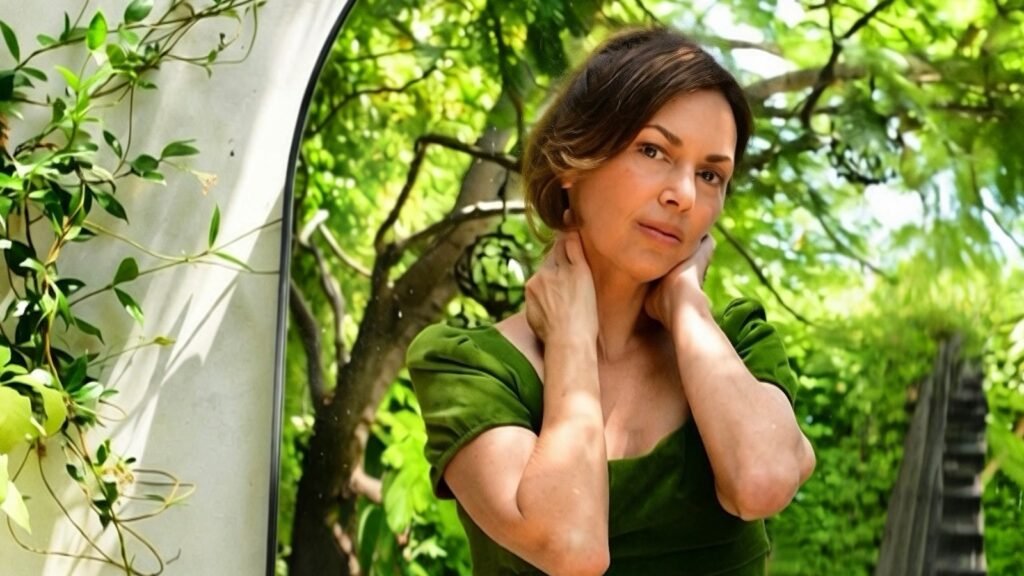
Susanna Hoffs has a list. When she was a teenager growing up in L.A., she began keeping her list in a leather-bound notebook. That’s where she started writing down the names of everyone she’s ever dated. She began when she was just an arty high-school kid in the 1970s, learning to play guitar by strumming along with her mom’s Beatles records.
But her list kept growing in the Eighties, when Hoffs suddenly blew up into a wildly famous rock star. With her band, the Bangles, she sang one massive hit after another, from “Manic Monday” to “Walk Like an Egyptian” to “Eternal Flame,” strutting her stuff on MTV. The Bangles were making history as one of their era’s only all-woman rock & roll bands, four California girls kicking down doors for female musicians. Yet all the while, she kept scrawling more names, in that same notebook.
“There’s a whole bunch of different names,” she says today, laughing over coffee in a posh NYC hotel. “Some actors. Some fuckwits, in truth. Then I would note if it was just a one-night thing — it would have a ‘1,’ or maybe a ‘2.’” She flashes a mischievous smile. “It’s a juicy list.”
Years later, Susanna Hoffs has turned that notebook into an excellent album, The List — her first batch of original tunes in 14 years. “It’s been fun to revisit not only the old memories, but the whole arc of the thing, over these decades,” she says. The List is full of her signature folk-rock tricks, looking back on her long, twisted, remarkable life in music. Hoffs has made her name as one of rock’s sharpest interpretive singers, with impeccable taste in covers, which is probably why she’s always been weirdly underrated as a songwriter. But 40 years after the Bangles first topped the charts, she’s ready to tell her stories.
She made the album in her home, with her producer and kindred spirit CJ Camerieri, who’s worked with Bon Iver, Phoebe Bridgers, and Paul Simon. “CJ introduced me to a whole gaggle of musicians I really fell in love with,” she says. They started tinkering in a studio, but soon switched to more familiar ground. “We realized that my house had the best acoustics. It was the coziest, warmest, fuzziest environment. So we recorded the whole album in my living room. It was easy for me — I could just walk downstairs and make coffee, get everybody upbeat and in the mood.”
The home environment makes sense, for such a personal project. “I had a Filofax notebook back in the day — this is how old-school I am,” she says. “Very posh, a nice leather diary. Pre-internet, that’s how I kept track of things. But I wrote down the name of my very first boyfriend, from high school. I don’t even know where he is now.” (She mentions his name — it only takes about ten seconds to find him alive and well online, though obviously he’s a civilian so nobody should bust him for fumbling a Bangle.) “So I met the first guy on the list, when I was 17. And then, as I went through my dating life, I just kept adding names to the list.”
She kept the list going into her thirties, until the Nineties. But it ends with a name on the final page, in all caps: “Jay Roach.” She met the Hollywood filmmaker on a blind date, married him in 1993, and they’ve remained madly in love ever since. Roach made the classic Austin Powers movies with Mike Myers, with Hoffs rocking out in the Sixties-themed house band Ming Tea. [youtube.com/watch?v=-HF3x67VK9o] They’re very much the Hollywood It Couple: every time he’s on TV winning an award, he finds a florid way to brag that he’s married to her, as any husband would do. She laughs merrily when she’s reminded of the year he won a Golden Globe for Game Change, and thanked “my muse, lover, friend, and Jewish rock angel Susanna Hoffs.”
But singing about him on the new album turned out to be a challenge. “The last name is Jay,” she says. “I have to hold myself back when I get to the line, ‘You were the last one on my list,’ which often brings a tear to my eye as I sing it. I feel my throat tighten a little bit. When I get close to that moment, I have to go, ‘Okay, calm yourself, girl.’”
The Bangles were a unique presence in the Eighties—an indie-rock garage band who went pop, sending shock waves through MTV. These California girls had a foot in the Sixties, with their intricate Rubber Soul harmonies and jangly guitars. But they also embraced the Eighties glam, big hair and all. “We had a very thrift-store aesthetic,” she says. “We kept trying to drag the Sixties kicking and screaming into the Eighties, but we were just scrappy. The Go-Go’s were more polished — I don’t know if it was the tutus or whatever. They were so great. I think we wanted to separate ourselves. But it worked — we could do super-melodic emotional songs and we weren’t shoegazery at all.”
The Bangles’ electrifying 1984 debut, All Over the Place, was Sixties flower-power rock with a postpunk guitar kick and a tough-talking feminist edge. “Hero Takes a Fall,” written by Hoffs and guitarist Vicki Peterson, blew up on MTV, showcasing the band’s jangly Rickenbackers and acerbic humor, stomping on a fragile male ego. Plenty of Eighties folks heard this song, or saw the video, and flipped for their new favorite band.
One of those people happened to be Prince. The Purple One fell in love with their sound (maybe also the singer, though they never dated), and wrote them a hit, “Manic Monday,” with Hoffs singing the immortal hook, “Come on, honey, let’s go make some noise!” When they met him at Paisley Park, they jammed until 3 a.m.—he knew all their songs. “Manic Monday” reached Number Two on the charts, blocked by the song at Number One: Prince’s “Kiss.” It kicked off a flurry of hits: “Walk Like an Egyptian,” “In Your Room,” the Simon & Garfunkel banger “Hazy Shade of Winter.” “We weren’t cool, exactly,” Hoffs says. “We just wore it on our sleeves.”
The Bangles came up in L.A.’s Paisley Underground scene in the early Eighties, where postpunk rockers rediscovered the psychedelic rock of the Sixties, which in fashion terms was strictly taboo. The Bangles, along with bands like the Rain Parade and the Dream Syndicate, taught Eighties kids how to hear music they officially weren’t supposed to like. The scene came together for the 1984 album Rainy Day, reviving obscure nuggets from the Byrds, Buffalo Springfield, Love, the Velvets — a vastly influential project that opened a lot of hipster minds.
“That was my ex-boyfriend, David Roback, who then went on to do Mazzy Star with Hope Sandoval,” Hoffs says. “David was my best friend’s brother. But once a romantic spark occurred between me and David, we became boyfriend and girlfriend. I almost said ‘lovers’ — that’s the worst word! But David and I became lovers.” They graduated from Pali High, in Pacific Palisades, then lived together in Berkeley, where she studied ballet, theater, and art. That’s also where they formed their first band together, the Unconscious. It was a powerful musical connection, with a huge influence on both Mazzy Star and the Bangles.
“We were so yin and yang because I’m always bubbly and he had a kind of darkness in him,” Hoffs says. “But the Mazzy Star stuff was beautiful darkness — just gorgeous. It was very sad when he passed away— way too young.” After leading the Rain Parade, Roback started Opal with Dream Syndicate bassist Kendra Smith, which became Mazzy Star when Sandoval replaced Smith on vocals. (Since “Fade Into You” and “Eternal Flame” have both become timeless classics, it might be surprising to recall they started out in the same place.) Roback masterminded the Rainy Day album, where Hoffs sang Bob Dylan’s “I’ll Keep It With Mine” and Lou Reed’s “I’ll Be Your Mirror” — totally unknown songs at the time.
“I had a bottle of whiskey in the studio,” she recalls. “I was a little rascally person. I took a swig and sang both songs in just one take. Rock & roll!”
Like the Georgia boys in R.E.M., who started making noise around the same time, the Bangles changed how people heard the Sixties — suddenly, all this hippie harmony was on the table. “I love that Sixties era,” Hoffs says. “I love the sonic quality of it, the warmth of those recordings. Just beautiful. The Sixties were like, to me, all sunshine-drenched music.”
“Casablanca” is one of the album’s most poignant tales, about a romantic stroll with a surprising rock star: the late great Bob Weir of the Grateful Dead. “The cute one in the band,” she says. “We were on tour with George Michael in 1988, and we kept noticing kids in tie-dye shirts on the way to New Orleans. I was in the lobby of the hotel, on a day off, staring out the window because I was bored. I see a van pull up. Then all of a sudden, I see the Grateful Dead file out of the back of the van.”
Ever the flower child, Hoffs had a word with someone on the Dead tour, who invited the Bangles to the band’s crawfish boil that night. “I said ‘Count me in, I’ll tell the other girls.’ We were at the Neville Brothers’ place, and Jerry Garcia’s there with his new baby. It was all so Grateful Dead-centric, but so fantastic.” The next night, the Dead brought the Bangles onstage, on the shores of Lake Pontchartrain, to sing along and dance — a truly surreal duet. “We did ‘Iko Iko,’ ” she recalls. “People were throwing the beads at us. It was crazy.”
After the show, Weir lured her away. “That’s how I got to know Bob Weir. He wanted to go on a walk with me. He was a big walker.” They took an innocent evening stroll down Bourbon Street, by the Mississippi River. “The moment in New Orleans when Bob said, ‘Let’s go for a walk’ — there was just something so dreamlike about it, for lack of a better way to describe it. I remember turning around when he said, ‘Let’s take a walk in the French Quarter.’ He had a flower in his hand, gesticulating with the flower as he talked. He was special. I mean, they all were, but Bob, he had a certain thing.”
Naturally, this rambling California rose adored the Dead. “They were very meaningful to me. You wouldn’t have thought that necessarily as a person who grew up on pop music and Dionne Warwick records and Burt Bacharach stuff, but I was a music junkie. Later on, when I reconnected with Bob, he remembered that night too, which really touched me. We both cherished that memory.”
If you’re geeking out about music with Susanna Hoffs, you need to bring your A-game. She’s the kind of deep rock nerd who loves to argue about the nuanced details of history. When the Zombies entered the Rock & Roll Hall of Fame in 2019, she gave a heartfelt tribute; she also joined a stage full of fellow legends to sing Bowie’s “All the Young Dudes.” As she notes proudly, “I was the only non-dude.” A couple of years ago, she did an irreverent revision of the Rolling Stones’ “Under My Thumb.” “That was sassy,” she says. “It was fun to turn the tables and make it girl-centric. Put him under her thumb.”
Hoffs grew up in the quintessentially 1970s free-spirited SoCal environment. “Yeah, I had very liberal-minded, democratic parents. My mother was the daughter of a very cool rabbi. He marched with Martin Luther King. My dad was a psychiatrist. There were no real rules. My dad was the best — I mean, he took us to see Midnight Cowboy when we were kids, because we wanted to see it. He always said, ‘Anything you don’t understand, I will explain.’ So anything about sex, my dad was so open. ‘This is how the body works, and that’s a body part, and then this is how you make a baby.’ He was so cool that way.”
In so many ways, the Hoffs home was the ultimate California dream. “It was always our house where everybody wanted to hang. And we had a pool table. My dad was really good at pool, too.”
When she met the Peterson sisters, guitarist Vicki and drummer Debbi, they were from a different world, Catholic schoolgirls from the Valley. “Their parents were so strict,” she recalls, “and they just had completely different upbringings.” But music brought them together. They met in late 1980 when Hoffs put an ad in the paper, looking to start a band. “‘Wait, you play guitar, and your sister’s a drummer?’” she recalls asking Vicki. “So they came over to the garage in Brentwood. I’d done stuff with David Roback, but I wasn’t savvy with technical things — they just laughed at me. ‘She’s so green!’ But then we needed to find a song, and they suggested ‘White Rabbit,’ because it only has two chords.”
The Jefferson Airplane psychedelic anthem might seem like a weird audition pick, but the musical connection was instant. “I started singing, and something happened,” Hoffs recalls. “We decided to be a band that night. It was like meeting someone on a blind date, and then jumping in the car, driving from L.A. to Vegas and getting married in an Elvis chapel. That’s how impetuous — or crazy — it was.”
Hoffs’ mom, listening on the front porch, said, “You girls sound like a band already.” Susanna replied, “Maybe we are.” Arty young women did not form bands in those days — not in L.A., not in the Eighties, not without a male Svengali figure pulling the strings. It just wasn’t done. But these women were ahead of their time, mixing folk tunecraft and punk aggro. They first called themselves the Bangs, a sexual double entendre, though another band had already claimed it, so they became the Bangles. They found bassist Michael Steele, a veteran of the Runaways. People tried to pit them against their friends in the Go-Go’s, but the Bangles had their own sound. They had ambition. They had drive.
They also had four ace singer-songwriters in the same band — a sure way to guarantee constant conflict. It didn’t take long for them to butt heads in public. When they made it to the cover of the Rolling Stone in 1987, both Petersons spent most of the interview trashing their latest album.
“Some people are trying to get a Bangles documentary off the ground,” Hoffs sighs. “But I don’t think it’s ever going to happen. So I’m just going about my business and wishing them well. People usually make documentaries where there’s a major tragedy or major drama. We had a Behind the Music episode, which is all [sings suspenseful music] ‘da-da-DUNNNN! Then this happened!’ With the documentary, I always think, ‘Well, you already have the Behind the Music. It’s not going anywhere.’”
That Behind the Music from Y2K did go into some of the band conflicts — especially how much the other Bangles hated “Eternal Flame,” their most famous hit. It’s a sublime Eighties ballad, full of angelic harmonies, yet a deeply eccentric one — almost half of it is the “repeat the chorus forever” coda. It sounded like nothing else on the radio. Hoffs wrote it with outside pros Billy Steinberg and Tom Kelly. “The ‘say my name’ part on ‘Eternal Flame’ was a complete left turn,” Hoffs says. “It wasn’t just verse-chorus-verse. When we got to that part, when me and Tom and Billy were writing together, my brain exploded.”
Everybody on earth loved this song. With three exceptions. “Eternal Flame” hit Number One in 1989, but became one of those hits that dooms a band. (The Eighties had lots of those stories.) It ripped the Bangles apart in a matter of months. “‘Eternal Flame’ is a beautiful song,” Vicki Peterson said on Behind the Music. “Whitney Houston could have a hit with it. Why are we doing it?”
“Vicki said something that I thought she shouldn’t have said,” Hoffs admits, more bemused than anything else. “Because she slagged Whitney Houston. I was like, ‘Don’t slag Whitney Houston!’” And I was so horrified. ‘You didn’t just say that. She’s an icon!’ And she slagged my most popular song — the Number One Bangles hit.”
She kicked off her solo career with a real oddity, When You’re a Boy, with the glam-pop hit “My Side of the Bed,” the rock ballad “Unconditional Love,” and the bizarro Bowie cover “Boys Keep Swinging,” where she sings, “Life is a pop of the cherry, when you’re a boy!” It was obvious she had no desire to play the conventional pop game, as she’s kept proving ever since.
She also tried acting, in the trashy Eighties beach flick The Allnighter, directed by her mother Tamar Simon Hoffs. “Oh God,” Hoffs groans. “That was just to help my mom do her low-budget movie. It’s very cheesy, but it’s become a weird, terrible cult classic. Like Beach Blanket Bingo, with worse dialogue and Eighties hair.”
Hoffs has kept continually active — she just published her first novel in 2023, the acclaimed best-seller This Bird Has Flown, about a rocker trying to make a comeback. She teamed up with longtime pal Matthew Sweet for a great string of crate-digging Under the Covers albums, under the name Sid & Susie, until his recent stroke. “I love to cover stuff with Matthew,” she says. “We were like kids in a candy store back in that time.” Her recent albums Bright Lights and The Deep End feature her interpretations of everyone from Nick Drake to Billie Eilish. On The List, she collaborates with a wide range of peers like Rufus Wainwright, Dan Wilson, Edie Brickell, and Wendy Melvoin.
But these days she’s on a roll with CJ Camerieri. Their next project is covering favorite albums in their entirety, starting — where else? — with the Beatles. “We’re remaking the Help! album, song by song,” she says. “The opening line is, ‘When I was younger, so much younger than today.’ It hits home now that my older self wanted to revisit my younger self. Songs like ‘The Night Before’ — that could be a 67-year-old lady’s perspective, looking back. We’re doing Revolver next.”
The Bangles’ songbook still holds up smashingly, from “Dover Beach” on the debut to “Glitter Years” on Everything. But the band’s crucial place in history gets obscured, since they were an Eighties band who broke up right before the Nineties explosion of female rock stars. So they failed to cash in on the freedoms of an era they helped to inspire. (When Kim Deal started the Breeders, she famously proclaimed them “the Bangles from hell.”) Hoffs is genuinely surprised to hear that the Bangles remain a touchstone for how modern pop sounds. When she asks for examples, she dutifully listens to songs like Olivia Rodrigo’s “U + Me = <3” or Taylor .
Swift’s “Hits Different,” both jangle-pop guitar bangers in the Bangles mode, both new to her.
She also pauses to watch a video clip she hasn’t seen in 40 years: the Bangles on MTV in 1985, on the late-night alt-rock showcase IRS’ The Cutting Edge. They’re in the back of the van, pre-fame, pre-pop glitz, just four punk girls on their way to the next gig, doing a scruffy sing-along on a 1966 nugget from the Mamas and the Papas, “Creeque Alley.” She smiles. “Total thrift-store aesthetics,” she says. “You know what? The Eighties were great!”
That’s part of why The List has so much emotional resonance — the sound of an adult sifting through her old stories, letting them tell her something new, with nothing bitter or jaded getting in the way. No doubt many listeners will wish they’d kept their own notebook over the years. “Maybe they can go back in time and cobble together a little list for themselves,” she says. “That guy was a dick! No, that girl was wonderful!’ Whatever it is. But that’s music for you. Music’s the beginning, middle, and end of every day. There’s always a song for every feeling or every day or every moment — any time you want it, it’s there. You can just pluck it from the ether.”
‘
Where to Watch Bears vs. Packers: Channel, Free Streaming Guide
The Bears’ Tyson Bagent will start against the Packers while Caleb Williams recovers...
Interscope Claims Summer Walker Owes $50 Million If She Exits Contract
Grammy-nominated R&B star Summer Walker is facing a new $50 million legal showdown...
‘Crazy Rich Asians’ HBO Series Announced. Original Cast Returning
The HBO series will see the film’s original stars reprise their roles Eight...
Riverside Church Ordered to Pay $11.3 Million to Child Sex Abuse Victim
A former player for the Riverside Church basketball program was awarded $11.3 million...