Mustafa’s ‘Dunya’ is a Gorgeous Treatise on Rage and Faith
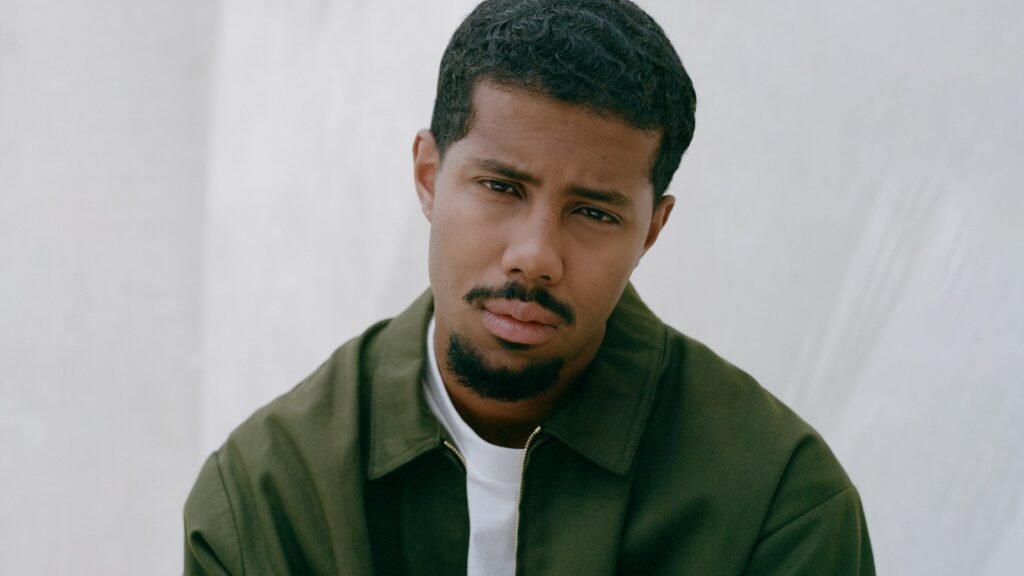
After making a name for himself as a behind-the-scenes pop songwriter (Camila Cabello, the Weeknd), Toronto-based Mustafa introduced himself as a major voice with 2021’s When Smoke Rises, an EP-length meditation on mourning after the death of his late friend, the rapper Smoke Dawg. In the meantime, the folk-leaning singer has become a rare artist willing to wholeheartedly voice their support for Palestinian liberation amidst Israel’s mass killing of civilians, organizing a series of Gaza benefit concerts featuring artists like Omar Apollo, Clairo, Daniel Caesar and Earl Sweatshirt.
The 27 year-old singer’s debut album, Dunya, furthers the textured folk music he introduced on When Smoke Rises with a list of varied A-list collaborators like Rosalía, Aaron Dessner, JID and Nicolas Jaar, (to name a few). Rightly front and center in the mix, amidst the acoustic guitars, flutes ouds, dulcimers and pianos, is Mustafa’s soul-deep voice, which is both smooth and weathered, which switches from croon to whisper then back from one line to the next, and which provides his music’s central tension of delivering shattered imagery of violence and brokenness in moments of arresting beauty (Listen to Mustafa’s narrator detail bashing a skinhead with his ring on “Gaza is Calling”).
On his debut LP, Mustafa’s gentle folk poems detail mental health crises and racialized criminal justice systems, and the result is a treatise on faith, rage, despair and grief both micro (“Nouri”) and macro (“Gaza is Calling”). This time around, however, the singer also makes clear his ambivalence about his rapidly-developing reputation as a poet laureate of anguish: When he sings “All that it did/was platform the pain,” on “What Happened, Mohamed?” it feels like he’s singing about his own weariness with the project he’s engaging in as he spins his vividly rendered story of the way aging creates distance between old friends.
With its rich melody and understated hooks, Dunya is, too, a merging of Mustfa’s pop sensibility: The songwriter delivering the hook on “Imaan” or the gorgeous alliterative refrain of album-opener “Name of God” (“in that warm winter/I withered/I just want to get better”), is very much the songwriter who’s penned tunes for Shawn Mendes and Justin Bieber.
One of the record’s most haunting moments comes towards its conclusion, on “Beauty, end,” just Mustafa singing over some acoustic instrumentation. He’s detailing a past of obedience and rule-breaking, of peace and violence, until he arrives at a conclusion he seems haunted by the moment he says it out loud: “I only see beauty,” Mustafa coos, “when it starts to end.”
Manon Shares Update With Fans After Katseye Hiatus
When Katseye teased their upcoming song, “Pinky Up,” with a short clip on Thursday,...
Courtney Love to Dave Grohl: ‘Just Say We’re Cool’
Courtney Love sat down for a sprawling conversation with Billy Corgan that covered everything...
New Details Emerge in Tiger Woods Rollover Car Crash, DUI Arrest
New details have emerged in the rollover car crash and DUI arrest of Tiger Woods in Florida,...
Justin Bieber Plays First U.S. Concert in Four Years: Watch the Videos
Ahead of his headlining Coachella set, the pop star performed an invite-only club gig for...